Cleveland winters are no joke. With Lake Erie just to the north, the city experiences some of the most punishing cold-weather conditions in Ohio heavy snowfall, relentless freeze-thaw cycles, and prolonged sub-zero wind chills that can stretch from November through March. While most homeowners brace for icy roads and heating bills, one area that often gets overlooked is the gutter system attached to their home.
Winter gutter damage in Cleveland, Ohio is more common and more serious than most people realize. The combination of snow accumulation, ice expansion, and the constant cycle of freezing and thawing puts extraordinary physical stress on gutters, fasteners, and the fascia boards they’re anchored to. Understanding how winter affects gutters in Cleveland is the first step toward protecting your home from the costly consequences that follow.
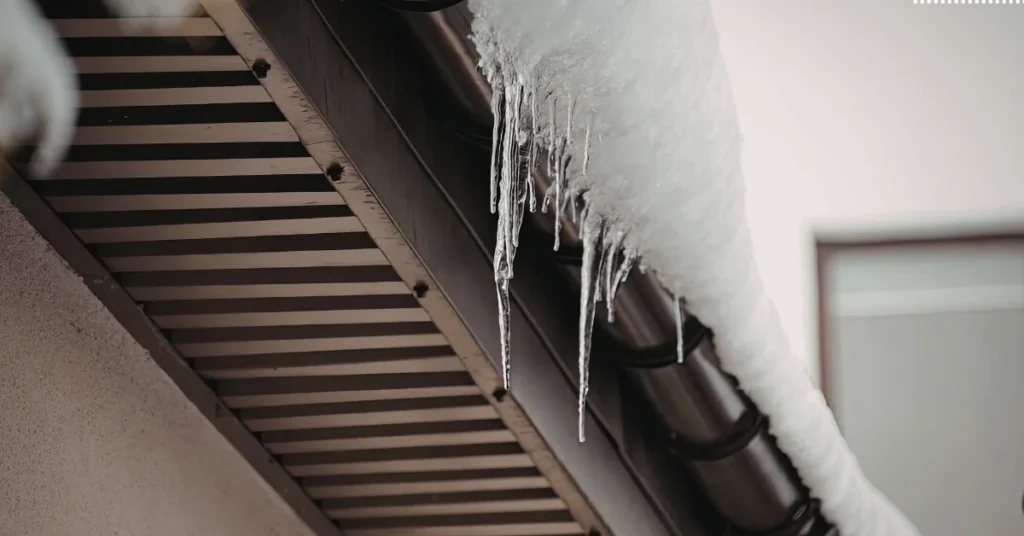
How Cleveland Winters Impact Your Gutter System?
Cleveland sits in a region meteorologists call the Lake Erie Snowbelt. Moisture pulled from the lake doesn’t just bring snow it brings heavy, wet, dense snow that accumulates fast and stays for weeks. The city averages over 60 inches of snowfall per year, and many neighborhoods on the west side regularly exceed that.
That snow and ice gutter impact isn’t limited to the weight of the buildup. It’s the cycle. Temperatures in Cleveland routinely swing above and below freezing within a 24-hour period during winters, sometimes multiple times in a single day. This constant freeze-thaw cycling is what causes the most structural damage to gutter systems.
When water trapped inside gutters freezes, it expands with significant force enough to crack seams, push brackets off the fascia, and distort the gutter’s shape. When it thaws, it refreezes in new positions, compounding the damage over time. Heavy snowfall gutter damage in Cleveland accumulates gradually, but the effects build up season after season until the system fails.
4 Common Types of Winter Gutter Damage in Cleveland, Ohio
Cracks and Splits from Freezing Temperatures
Water has a well-known property, it expands when it freezes. Inside a gutter channel, this expansion has nowhere to go except outward. When water pools in gutters due to debris, sag, or inadequate slopeand then freezes overnight, the pressure it creates can be enough to crack aluminum, split vinyl seams, and stress-fracture older steel gutters.
Gutter cracks and splits from freezing are among the most common forms of winter gutter damage in Cleveland, Ohio. What starts as a hairline crack in autumn becomes a fully separated seam by February. These cracks allow water to leak directly onto the fascia board and into the soffit, causing rot that is far more expensive to repair than the gutter itself.
Vinyl gutters are especially vulnerable to this type of damage. At low temperatures, vinyl loses its flexibility and becomes brittle. It makes it far more susceptible to cracking under the stress of ice expansion.
Sagging Gutters from Snow and Ice Weight
A standard 10-foot section of gutter can hold several gallons of water. When that water freezes and is joined by snow accumulation above and around it, the combined weight can easily exceed what the gutter hangers and fasteners were designed to support.
Sagging gutters due to snow weight are a visible sign that the system is being overwhelmed. When a gutter pulls away from its proper slope, it no longer drains correctly which means water sits, freezes, and adds even more weight. It becomes a self-reinforcing problem.
Ice buildup in gutters can add tens of pounds of force pulling down on gutter brackets. Over multiple winters, even well-installed gutters can start to sag, separate at the joints, or pull the fascia board forward as the weight increases.
Ice Dams and Blockages
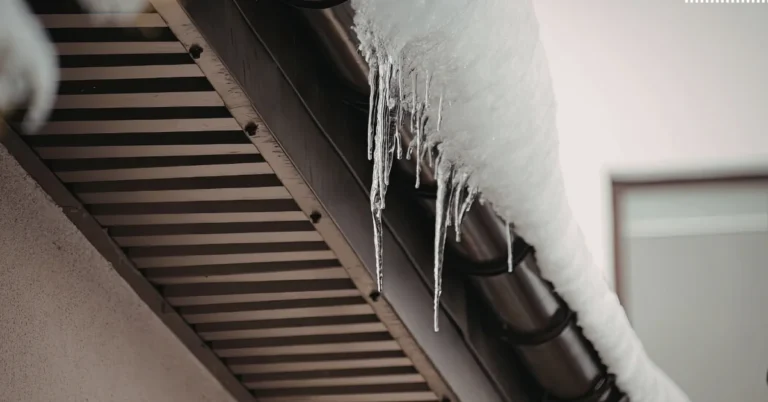
Ice dams are one of the most misunderstood forms of winter roof and gutter damage. They form when warm air from inside the home rises through the attic and heats the upper portion of the roof, melting the snow there. That meltwater then travels down toward the cold eaves, where it refreezes often directly inside or at the lip of the gutter.
The ice dam effects on gutters in Cleveland can be severe. As the dam grows, it forces water to back up under the shingles and into the roof deck, leading to leaks and rot. At the same time, the weight of the growing ice formation strains the gutter system below. Blocked gutters from ice buildup also prevent any drainage from occurring, causing water to pool and exacerbate both the dam and the structural stress on the gutters.
Homes with poor attic insulation or ventilation are especially prone to ice dam formation. A structural issue that goes hand-in-hand with gutter damage but requires a separate solution.
Loose or Detached Gutters
Gutter fasteners the hangers, spikes, or screws that hold gutters to the fascia board are designed to hold the gutter in place under normal conditions. But the repeated stress of ice expansion and heavy snow weight causes these fasteners to loosen over time.
Gutter separation from fascia is one of the most serious outcomes of winter damage because it exposes both the gutter and the fascia board to further water intrusion. Once a gutter begins to pull away, even slightly, its drainage angle changes leading to pooling that accelerates ice dam formation.
Loose gutter fasteners from winter damage often go unnoticed until a heavy rain in spring reveals that the gutter is no longer draining toward the downspout. By then, the fascia board behind it may already have begun to rot.
Drainage Problems After Winters in Cleveland Homes
Spring in Cleveland arrives with a rush of melting snow and early rainstorms often simultaneously. For a gutter system that has spent the winter under stress, this is the worst possible timing. Any damage that accumulated quietly through the cold months becomes an active problem the moment high volumes of water start flowing.
Water overflow issues after winter are common in Cleveland homes because damaged, sagging, or partially detached gutters simply cannot handle the volume. Melting snow gutter overflow occurs when gutters that held ice all winter are suddenly asked to channel large amounts of runoff within a short window.
Improper drainage in Cleveland homes after winter can direct water toward the foundation, into window wells, and along the base of exterior walls all places where water doesn’t belong. The damage that results isn’t always immediately visible, but it compounds over time.
Signs of Gutter Damage After Winter in Cleveland
Knowing what to look for after the snow melts can save homeowners thousands in repair costs. Signs of gutter damage after winters in Cleveland include both visual indicators and performance problems:
- Visible cracks, holes, or rust spots along the gutter channel or at seams
- Sections of gutter that appear to sag, bow, or pull away from the roofline
- Ice staining or mineral deposits on the exterior of the gutter or siding below it
- Clogged or damaged gutters after winter that overflow during moderate rainfall
- Standing water in gutters days after rain, suggesting a slope problem or blockage
- Paint peeling or staining on fascia boards, indicating water is getting behind the gutter
- Debris-filled downspouts that back up and cause water to spill over the front of the gutter
- Gutter leaks after snow melts, visible as water dripping from joints or the back of the gutter
If you observe any of these signs, it is worth having the system inspected before spring rains put it fully to the test.
Why Winter Gutter Damage Is a Serious Problem?
It’s tempting to treat a sagging gutter or a small crack as a cosmetic issue. It isn’t. A compromised gutter system is one of the most direct pathways for water to reach the structural components of your home.
When gutters fail to direct water away from the house, it flows off the roofline and pools against the foundation. Water pooling near the foundation in Cleveland homes is a serious concern because Cleveland’s clay-heavy soil doesn’t drain quickly it saturates, expands, and exerts hydrostatic pressure against foundation walls. Over time, this leads to foundation cracking, shifting, and costly structural repairs.
Basement water risk from bad gutters is also significant. Water that pools against the foundation eventually finds its way through cracks, mortar joints, or window wells into the basement. Basement waterproofing is far more expensive than gutter repair or replacement in cleveland.
Beyond the foundation, water that backs up under shingles due to ice dam formation damages the roof deck, insulation, and ceiling below. In severe cases, it leads to mold growth inside wall cavities, a health hazard that requires professional remediation. All of this can trace back, directly or indirectly, to a gutter system that failed under winter conditions.
How to Prevent Winter Gutter Damage in Cleveland
Preventing gutter damage in Ohio winters requires action taken before temperatures drop ideally in October, before the first hard freeze arrives.
- Clean gutters thoroughly in late October: Remove all leaves, debris, and standing water before winter. Debris-filled gutters hold moisture that accelerates freeze damage.
- Inspect and tighten fasteners: Check that all gutter hangers and screws are secure before winter. Replace any that show signs of corrosion or loosening.
- Ensure proper slope: Gutters should slope at least 1/4 inch per 10 feet toward the downspout. A gutter without slope will pool water and freeze.
- Install gutter guards carefully: Some guards help prevent debris accumulation, but the wrong type can actually trap ice. Choose guards rated for cold climates.
- Protect gutters from ice dams: Improving attic insulation and ventilation is the most effective long-term strategy for preventing the roof heat that causes ice dams.
- Consider heated gutter cables: Electric de-icing cables installed along the gutter and roof edge can prevent ice buildup in problem areas.
- Trim overhanging branches: Branches loaded with snow can drop directly into gutters or break and damage them. Trim back trees within reach of the roofline each fall.
- Schedule a pre-winter inspection: Winter gutter maintenance in Cleveland should include a professional evaluation of the system’s condition before the season begins.
When to Inspect Gutters After Winter in Cleveland
The ideal window for a post-winter gutter inspection in Cleveland is late February through early April, after the heaviest ice has melted but before the full force of spring rains arrives. Waiting until May means potentially running compromised gutters through several weeks of heavy rainfall.
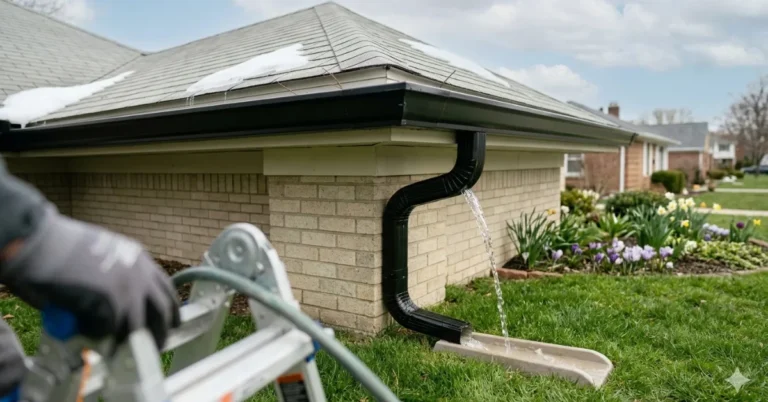
How to check gutters for winter damage in Cleveland? Start by walking the perimeter of your home and looking at the gutters from the ground. Look for visible sag, separation from the fascia, or sections that appear displaced. Then, run a hose through the gutter and observe whether water drains cleanly toward the downspout or pools in sections. Check downspout outlets for ice plugs that may not have fully cleared yet.
Any inspection after a particularly harsh winter or following a season with multiple significant snowstorms should be treated as a priority. Damage that is caught in March is far easier and less expensive to address than damage discovered in summer after months of water intrusion.
When to Consider Professional Help
Some post-winter gutter issues are within the scope of a confident DIYer clearing debris, reseating a loose hanger, or sealing a small joint crack. But many of the damage patterns that develop over a Cleveland winter require professional assessment.
A professional gutter inspection in Cleveland is warranted when gutters show visible sagging, multiple cracks or separations, or any sign of fascia damage behind the gutter channel. Pros can assess whether the damage is limited to the gutter itself or whether it has extended into the fascia, soffit, or roof decking.
Gutter repair in Cleveland, Ohio after a harsh winter may involve resealing joints, replacing damaged sections, re-pitching the gutter for proper slope, or installing new hangers at closer intervals to better support weight during future winters. In some cases particularly with older vinyl or sectional aluminum systems — full replacement with seamless gutters is the most cost-effective long-term option.
If ice dams have been a recurring problem, a professional can also advise on attic improvements, gutter upgrades, or de-icing systems that address the root cause rather than just the symptom.
FAQs
How do winters damage gutters in Cleveland?
Can ice dams damage gutters in Ohio?
What are signs of gutter damage after winter?
When should gutters be checked after winter in Cleveland?
Conclusion
Cleveland winters are hard on gutters there’s no way around it. The freeze-thaw cycles, the weight of Lake Erie snowfall, and the ice that forms along cold eaves all work against a gutter system season after season.
Understanding what damage winters cause to gutters in Cleveland is essential for any homeowner who wants to protect their property against water intrusion, foundation stress, and costly structural repairs.
The good news is that most winter gutter damage is preventable with regular maintenance, pre-season preparation, and timely post-winter inspection. Catching problems early before spring rains arrive in force is the most effective way to stay ahead of the damage cycle.
If your gutters have been through another Cleveland winter, don’t wait for a leak to tell you something is wrong. A proactive inspection now costs far less than the repairs that follow when damage goes unaddressed.